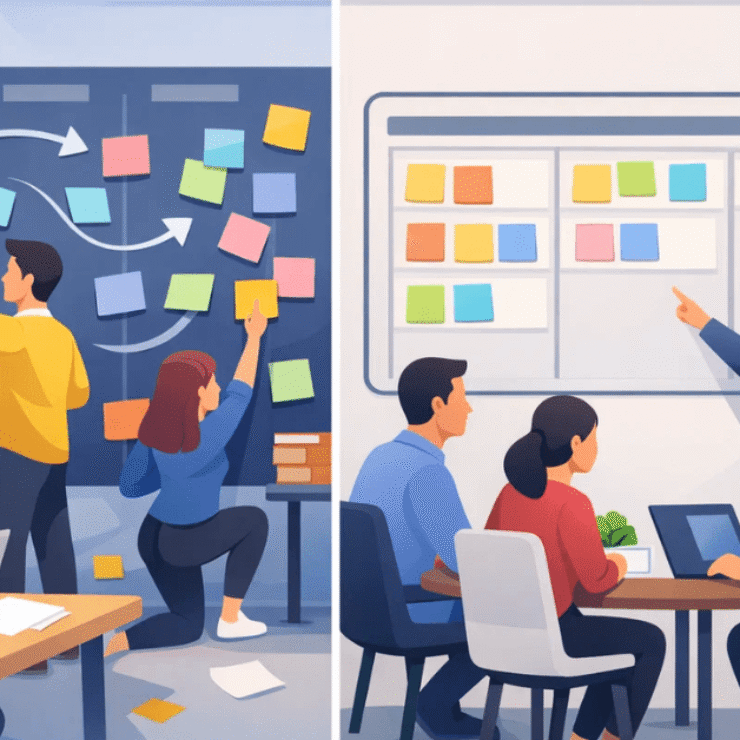

Introduction
If you keep putting things off — emails, chores, even important goals — you’re not alone. Researchers estimate that roughly one in five adults are chronic procrastinators – so if you struggle to start, you’re not an outlier, you’re part of a very large group. The 2 Minute Rule is one of those simple, almost deceptively small strategies that can genuinely shift the way you work.
And after 15+ years working with professionals, founders, and fast-moving teams, I’ve noticed something consistent: most procrastination doesn’t come from laziness. It comes from hesitation. That tiny moment where your brain says, “Not now… maybe later.” The Two-Minute Rule helps you override that hesitation in the gentlest way possible.
Let’s break it down so you can use it today — at work, at home, and on the goals that matter to you.
What Is the Two-Minute Rule? (And Why Everyone Defines It Differently)
Different experts use the same phrase — “Two-Minute Rule” or “2 Minute Rule” — but they’re actually talking about three different ideas. When you understand these three, you’ll know exactly when to use each one.
1. The original GTD version (David Allen)
In Getting Things Done, David Allen says: If something will take less than two minutes, do it immediately.
Why? Because the time spent storing, tracking, and revisiting that tiny task will take longer than just finishing it now.
2. The Atomic Habits version (James Clear)
James Clear reframes it beautifully: When you start a new habit, reduce it to something that takes under two minutes.
- “Read one page.”
- “Walk for two minutes.”
- “Write one sentence.”
These tiny versions make big habits feel easy to begin.
3. The “Just Start for Two Minutes” trick
This version is simple psychology: Commit to working on something scary or overwhelming for just two minutes. Most of the time, once you’ve started… your resistance melts away.
So what do people actually mean by ‘Two-Minute Rule’?
In real life, it means one of these:
- Finish small tasks immediately
- Start big habits in tiny, no-pressure steps
- Use 2 minutes as a momentum builder for intimidating tasks
And all three are powerful for different situations.
Why the Two-Minute Rule Works (Backed by Psychology, Not Motivation Quotes)
1. It lowers the “activation energy” needed to begin
Your brain finds starting harder than doing. Two minutes helps you bypass that first friction point.
Expert Insight: Over the years, I’ve seen teams stuck on tasks simply because “starting” felt mentally heavy. The moment we introduced 2-minute micro-actions, their responsiveness and confidence improved almost instantly. Starting really is half the battle.
2. It gives your brain a quick dopamine reward
Finishing a tiny task gives you a hit of “I did it.” That little moment of progress is often enough to push you forward.
3. It reduces mental clutter and open loops
Every unfinished task lives rent-free in your mind. Two minutes helps you close those loops fast.
4. It helps retrain avoidance habits
Procrastination often comes from anxiety, perfectionism, or uncertainty — not lack of effort. Two-minute actions interrupt that cycle before it becomes a pattern.
In a 9-month study of over 3,500 university students, those who procrastinated more didn’t just feel “a bit behind” — they later reported higher depression, anxiety, stress, poorer sleep, more physical inactivity, and even more financial difficulties. Procrastination isn’t just a time problem; it quietly erodes wellbeing.
How To Use the Two-Minute Rule To Stop Procrastinating (Step-by-Step)
Here’s the part most articles skip — how to actually implement the rule in daily life.
Step 1: Create a simple “Two-Minute Habit Loop”
Pick a trigger → choose a 2-minute action → reward yourself with a micro-win.
Examples of triggers:
- Sitting at your desk
- Opening your inbox
- Returning from a meeting
Step 2: Use the GTD version for micro-tasks
Whenever you’re in “admin mode” — email, Slack, files — clear anything that can be finished in under two minutes.
It keeps your backlog light and your mind clear.
Step 3: Use the Atomic Habits version for new habits
Don’t commit to the whole habit. Commit to the gateway action:
- Want to learn? → “Open my notes and read one paragraph.”
- Want to exercise? → “Put on workout clothes.”
- Want to write more? → “Open the doc and write one sentence.”
You’re simply making the habit easier to start.
Step 4: Use the momentum version for scary or complex tasks
If a task feels intimidating — proposal, project plan, long email — do two minutes only.
Expert Insight: I’ve coached people who avoided a task for weeks… until we tried the 2-minute start. Once they began, the work flowed naturally. The trick isn’t finishing — it’s simply breaking the emotional barrier at the beginning.
Step 5: Protect your deep-work hours
Don’t let two-minute tasks hijack your focus.
During deep work:
- Don’t open your inbox
- Don’t respond to alerts
- Don’t switch tasks “just for a minute”
Save your Two-Minute Rule for transitions between major tasks.
Two-Minute Rule Examples You Can Start Using Today
The beauty of the 2 Minute Rule is that it works across every part of your day — from work to home to personal goals. Here are expanded, practical examples you can use immediately.
At Work
The 2 Minute Rule is incredibly effective at work, but only when you use it intentionally. Try these to stop procrastinating at work:
- Reply to a simple email instead of starring it for “later.”
- Rename and organize files the moment you download them.
- Add a quick task to your PM tool (like Karya Keeper) instead of trying to remember it.
- Jot down 2 minutes of meeting notes before you forget key details.
- Approve or reject a pending request that takes a few clicks.
- Close browser tabs you no longer need — tiny action, big mental clarity.
- Document one blocker or update in your team chat.
These small maintenance tasks prevent the “work pile-up” that usually leads to stress and procrastination.
For Studying or Learning
If you’re a student or trying to build a new skill:
- Highlight one paragraph from your chapter or article.
- Solve a single practice question — often enough to build momentum.
- Review one flashcard deck for 2 minutes.
- Rewrite one difficult concept in your own words.
- Watch 2 minutes of a tutorial video to prime your brain for longer learning.
This helps you overcome the classic “I’ll start tomorrow” trap.
At Home
Home tasks are often tiny but emotionally heavy — perfect for the 2 Minute Rule.
- Put away one item that’s out of place.
- Wash your plate immediately instead of letting dishes stack.
- Throw away expired items from your fridge or desk.
- Refill your water bottle to stay hydrated.
- Book a doctor, salon, or service appointment you’ve been postponing.
- Fold a single piece of laundry (often triggers finishing the rest).
These actions create a sense of order and reduce background stress.
For Personal Growth
Use the 2 Minute Rule to nurture your mind and body:
- Stretch or breathe deeply for two minutes.
- Write one sentence in your journal or gratitude log.
- Meditate with a 2-minute timer — no pressure for long sessions.
- Open your reading app and read one page.
- Review your goals for just two minutes at the start or end of your day.
Tiny inputs lead to compounding results over time.
Using the Two-Minute Rule at Work (Without Getting Lost in Tiny Tasks)
The rule helps you move quickly — but it can also distract you if misused.
When it’s perfect
- At the start of your workday
- During email or Slack cleanup
- After meetings to log quick notes
- While clearing simple blockers for teammates
When it becomes a problem
If you keep interrupting your deep work to do “quick tasks,” you’ll lose more time than you save.
Healthy boundaries
- Do 2-minute sweeps at set times
- Don’t use the rule during focus blocks
- Set a maximum number of micro-tasks per hour
One 2025 analysis of workplace productivity data found that the average worker loses 1 hour and 18 minutes a day to distractions — that’s nearly 340 hours a year gone to tiny interruptions, context switching, and “I’ll just check this quickly” moments.
Two-Minute Rule vs Other Productivity Methods
The Two-Minute Rule doesn’t replace other systems — it fits alongside them. Think of it like a Swiss Army knife: small, simple, and useful everywhere.
Here’s how it compares.
Two-Minute Rule vs Pomodoro Technique
- Pomodoro = 25 minutes of focused work, 5-minute break.
- 2 Minute Rule = small action to start or finish quickly.
How they work together: Use a 2-minute action to kickstart a Pomodoro session. Example: “Open the document and write one sentence” → now begin your 25 minutes.
Use 2-minute tasks immediately after a Pomodoro to clean up small loose ends.
Two-Minute Rule vs Eisenhower Matrix
- Eisenhower helps you decide what matters most: urgent vs important.
- The 2 Minute Rule helps you execute quickly on small urgent tasks.
Example pairing: If a task falls into “Do Now” and takes under 2 minutes → do it right away. If it takes longer → schedule it properly.
This pairing prevents tiny tasks from stealing space in your priority system.
Two-Minute Rule vs Time Blocking
Time blocking technique gives your day structure. The 2 Minute Rule gives your day momentum.
How to combine them:
- Use 2-minute tasks between time blocks to reset your mind.
- Add “2-minute sweeps” at the start of your morning and after lunch.
- Use 2 minutes to prep for the next block (open tabs, gather materials, set context).
This keeps your transitions smooth and reduces resistance.
Two-Minute Rule vs Habit Stacking
Habit stacking = “After X, I will do Y.”
The 2 Minute Rule = “Make Y simple enough to start right now.”
Together they become powerful:
Example: After I pour my coffee (habit stack), I will read one page (2-minute habit).
Common Mistakes, Limitations & How To Fix Them
Most people don’t fail because the rule is weak — they fail because they misuse it. Here’s how to avoid those traps.
Mistake #1: Turning your whole day into mini-tasks
If everything becomes a 2-minute task, you end up reacting all day instead of creating meaningful results.
Fix: Batch your 2-minute tasks. Use them only during:
- start of day
- after meetings
- during low-energy periods
- end of day cleanup
Mistake #2: Underestimating task size
Some tasks look like 2 minutes but are actually 10–20 minutes. (Example: “I’ll just check Instagram for 2 minutes.”)
Fix: Create personal rules:
- No social media
- No “quick research”
- No opening YouTube
- No opening analytics
These rarely stay small.
Mistake #3: Using 2-minute tasks to avoid real work
Sometimes we use productive micro-tasks to escape difficult priorities.
Fix: Identify top 1–2 priorities for the day. If a 2-minute task doesn’t support those → delay it.
Mistake #4: Interrupting deep work
Deep work requires focus without distractions.
Fix: During deep work blocks:
- Turn off notifications
- Close inbox
- Keep a “Later List” for 2-minute tasks you want to remember
When the rule may not be enough
If procrastination is rooted in:
- anxiety
- perfectionism
- ADHD
- burnout
Then the 2 Minute Rule helps, but it may not solve the underlying cause.
Pair it with:
- accountability
- structured planning
- clearer environment
- professional guidance if needed
A 7-Day Two-Minute Rule Challenge (Make It Stick)
This challenge makes the habit automatic and effortless — even for busy schedules.
Day 1–2: Two-Minute Sweeps
Do three sweeps per day. Each sweep = finish 5 tiny tasks.
Examples:
- reply to one message
- close unused tabs
- throw away trash
- rename a file
- schedule a reminder
This clears mental clutter fast.
Day 3–4: Two-Minute Habit Starters
Pick one habit and commit only to the 2-minute version.
Choices could be:
- reading one page
- doing two minutes of stretching
- reviewing goals
- writing one sentence
- meditating with a 2-minute time
Consistency is more important than intensity here.
Day 5: Two-Minute Start for a “Scary” Task
Choose something you’ve been avoiding — taxes, writing, a proposal, a message — and start for two minutes only.
Most people naturally continue once they begin. If you don’t, it’s okay — the goal is lowering resistance, not completion.
Day 6–7: Build Your Personal Two-Minute System
Define:
- Your 2-minute windows (morning, after lunch, evening).
- Your allowed 2-minute tasks (admin, cleanup, prep).
- Tasks you will NOT do under 2 minutes (social media, research, inbox during deep work).
- How you track progress — simple checklist or phone notes.
By Day 7, you’ll have a system tailored to your life, not a generic productivity hack.
Conclusion
The Two-Minute Rule works because it respects human nature. It doesn’t force you to be superhuman, perfectly disciplined, or endlessly motivated. Instead, it helps you take the smallest possible step — and those steps compound into meaningful progress.
In my 15+ years of working with teams and individuals, I’ve seen this rule transform workflows, reduce procrastination, and make overwhelming goals feel doable again.
If there’s one thing to remember, it’s this:
You don’t need to feel ready. You just need to start — for two minutes.
Let the rest take care of itself.
FAQs
A strategy to start or finish tasks quickly by committing to just two minutes.
Yes — because it removes the emotional and mental barrier to starting.
Both. Each author uses it differently — and both are useful.
Use it during transitions, not during deep focus.
Absolutely — it works incredibly well for building study momentum.
Yes. Two minutes is just a starting point.
Use a timer. Stop when the timer rings unless you consciously choose to continue.
Yes — it reduces overwhelm. But it should be paired with other supportive systems.